

Miss Peregrine’s Home For Peculiar Children
by Ransom Riggs
Quirk Books
ISBN-10: 1594744769
ISBN-13: 978-1594744761
Jacob Portman’s grandfather is a bit peculiar. He collects guns, disappears from time to time, and is always telling strange and exciting tales of odd children and horrible monsters and an enchanted island off the coast of Wales. And then there’s that old photo album, filled with strange pictures of weird kids. Jacob isn’t sure if the stories are true or not. He used to believe, but now he’s older and knows better. Unfortunately, Grandpa is older too and may be getting a bit senile.
One day, he gets a call from Grandpa asking for the key to his gun locker. They’ve found him, Grandpa says, and he needs his guns to fight them. Thinking he’s really lost it, Jacob heads over to his house with a friend to calm him down. They find Grandpa near the woods, looking like he’s been mauled by an animal. With his last dying breath, he leaves Jacob a strange cryptic message about a loop and Emerson and finding the bird.
Jacob begins having bad dreams about Grandpa’s death and starts seeing Dr. Golan, a psychiatrist. As he learns more about himself, he also learns more about Grandpa, and it seems his stories may have been true after all. Jacob decides he’s going to Grandpa’s island for some answers. Dr. Golan thinks it’s a good idea. Jacob’s parents agree to let him go, but his father, an as yet to be published writer living off his wife’s money, will go, too. He’ll do some research for a new book. A book about birds.
There’s not much on Grandpa’s island. There’s only one hotel and one phone, and there’s no reception for cells or internet. Jacob goes exploring and finds Miss Peregrine’s Home for Peculiar Children, but there isn’t much left to it. It was bombed September 3, 1940. As he returns to the hotel, he notices something odd. The cars and trucks are gone. Instead, there are carts and horses and everyone is dressed funny. Somehow, he’s managed to end up in the past, on September 3rd, 1940, the day the bomb fell. And that’s when he meets the girl from Grandpa’s photo album - the girl who can hold fire.
The adventure begins.
* * * * *
This story is far too involved to give a complete synopsis, but no matter what you like to read, there’s something here for everyone. Riggs gets into time travel, history, fantasy, mystery, monsters, and even romance. He’s got so many irons in the fire here, and he pulls them all together nicely to create a very involving story with lots of twists and surprises. And Riggs doesn’t rely on just the adventure. Jacob also struggles with his relationship with his father, who feels inadequate because he’s living off his wife, can’t sell a book, and doubts his talents. But as the story moves on, you can see their attempts to become closer, as well as his father’s struggle to be his own person.
The ending was a bit disappointing because nowhere on the flap is there a hint that this is just the first of a series, so I assumed I was going to get the whole story, bust as I got closer and closer to the end, it became clear that not everything was going to be resolved. This book is merely the beginning of a story that could go on for as long as Riggs wants it to. The ending does work, though, as an ending for the book.
The drawbacks? It’s a first novel and reads like it didn’t get a lot of editing. There are lots of anomalies, like characters from the past who know nothing of the ‘real’ (Jacob’s) world, and then are suddenly explaining who Jeffrey Dahmer is. Jacob tells us over and over he’s not a good a liar, then brags about how cool his lies to Dr. Golan are. We’re told confined spaces scare the hell out of him, but he’s never scared in confined spaces, and when something is suddenly needed - a cell phone, a photo album - the characters just happen to have them when we never saw how they got them.
But in spite of all that, I really liked it. The story made me not care about the writing. It pulled me along from scene to scene for the most part. Riggs makes good use of all his characters. They have depth and substance, and there are no one scene walk-ons. And there’s lots of mystery and intrigue, not to mention those cool photographs.
Will I be buying future books in the series? You bet.
On a marketing note, Quirk Books are the people who brought you Pride and Prejudice and Zombies, another best seller, as well as The Strange Case of Benjamin Button. A movie is already in the works for Miss Peregrine. Seems to me that if you write about the strange, the odd, the quirky, this might be the place for your book.
The ending was a bit disappointing because nowhere on the flap is there a hint that this is just the first of a series, so I assumed I was going to get the whole story, bust as I got closer and closer to the end, it became clear that not everything was going to be resolved. This book is merely the beginning of a story that could go on for as long as Riggs wants it to. The ending does work, though, as an ending for the book.
The drawbacks? It’s a first novel and reads like it didn’t get a lot of editing. There are lots of anomalies, like characters from the past who know nothing of the ‘real’ (Jacob’s) world, and then are suddenly explaining who Jeffrey Dahmer is. Jacob tells us over and over he’s not a good a liar, then brags about how cool his lies to Dr. Golan are. We’re told confined spaces scare the hell out of him, but he’s never scared in confined spaces, and when something is suddenly needed - a cell phone, a photo album - the characters just happen to have them when we never saw how they got them.
But in spite of all that, I really liked it. The story made me not care about the writing. It pulled me along from scene to scene for the most part. Riggs makes good use of all his characters. They have depth and substance, and there are no one scene walk-ons. And there’s lots of mystery and intrigue, not to mention those cool photographs.
Will I be buying future books in the series? You bet.
On a marketing note, Quirk Books are the people who brought you Pride and Prejudice and Zombies, another best seller, as well as The Strange Case of Benjamin Button. A movie is already in the works for Miss Peregrine. Seems to me that if you write about the strange, the odd, the quirky, this might be the place for your book.


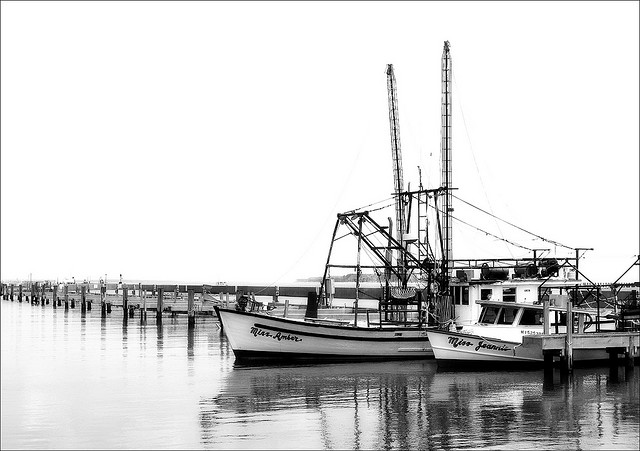


 Maybe your latest WIP takes place on an imginary desert world? Check out the Gobi and Sahara for ideas. Are there castles in your story? Buzz over a few to see how they use terrain for defense or to see how they were built. Look at the differences between an English castle and a German castle. Do you need to know what the bayou looks like, or a seaside town? Does your story take place in Hollywood or a South African diamond mine? Google Earth can help you. You can even go to the moon and Mars if you like. While there’s not much to see (yet) you can at least get place names.
