Wednesday, March 31, 2010

Women of Wednesday--Let's Talk!

Andy has graciously allowed me to post during her week. I read a New York Times opinion piece that I must comment on. It's "The Boys Have Fallen Behind" by Nicholas D. Kristof. You really should read it before you continue with this post. So, click here and I'll wait.

Okay, you're back. So what did you think of this?
Some educators say that one remedy may be to encourage lowbrow, adventure or even gross-out books that disproportionately appeal to boys. (I confess that I was a huge fan of the Hardy Boys, and then used them to entice my own kids into becoming avid readers as well.)

Indeed, the more books make parents flinch, the more they seem to suck boys in. A Web site, guysread.com, offers useful lists of books to coax boys into reading, and they are helpfully sorted into categories like "ghosts," "boxers, wrestlers, ultimate fighters," and "at least one explosion."
I'll tell you what it means to me--it means publishers who already give short shrift to girls' nonfiction interests, are going to be paying even less attention to their interests now that the boys have fallen behind.

I once proposed a book on hair--history, care, all aspects of it--and was told that there wasn't an audience for it--boys wouldn't read it. Have you seen many nonfiction series books on fashion for young girls? Have you seen any? Or series on dancing? How about fairies? It's so easy for people to dismiss this as stereotypical "dumb girl stuff," but guess what, girls like it. We dismiss "gross-out" books too, but we will rush to publish them to attract the boy reader. Is this fair? Am I wrong?

"Girls will read anything" we're told. So, we reward them by slapping them in the face? You're not a boy, so your interests don't count! Nearly every school/library publisher has series on topics that are primarily of interest to boys--vehicles, extreme anything, military. Not to pick on any one publisher, but just look at this page. Where's the corresponding page for girls?

I agree we should support reading amongst both girls and boys, but let's not benefit one half of our population at the expense of the other half. I'll just close with this from the last paragraph of "The Boys Have Fallen Behind" (emphasis mine):
At a time when men are still hugely overrepresented in Congress, on executive boards, and in the corridors of power, does it matter that boys are struggling in schools? Of course it does: our future depends on making the best use of human capital we can, whether it belongs to girls or boys. If that means nurturing boys with explosions, that’s a price worth paying.
And while we're busy nurturing the boys, the girls will be getting all they need to get them into Congress and the boardrooms? Highly unlikely--it's a man's world, afterall.

--Diane

Monday, March 29, 2010

Putting the 4-Year Old In Your 4-Year Old

Muriel wrote a terrific post last Monday entitled Perception is Based on Experience. In order for your reader to connect with your words, you need to understand what your reader understands. In other words, you need to know where your reader falls on the developmental spectrum.

Who are you writing for? Preschoolers? School-agers? Tweens? Teens? Quite obviously, they are not the same beast. Do you know any actual children currently dwelling within the age range for which you're writing? Don't rely solely on your own memories of what you were like at 4 or 14-years old. I guarantee you're misremembering some things and not remembering most things about the age.

And don't rely on knowing only one or two children. You may know the exceptions to the developmental rules. I have a 4-year old in class this year who is a whiz at history. Keegan has meaningful knowledge of historical events way beyond his years. He's fascinated with World War II, and his current passion is the H.M.S. Hood. The other day, he organized two of his classmates to reenact the sinking of the Hood by the Bismark. He only wanted two people to play with him because only three men survived the sinking.

Am I going to write a book aimed at 4-year olds with a gifted 4-year old character who reenacts great battles of World War II? Nope. I'm pretty sure that Keegan is one of the few 4-year olds on the planet who could appreciate such a book. I know he's the only 4-year old I've had in 30 years of teaching who wanted me to find Johnny Horton on the internet so he could listen to him sing The Battle of New Orleans.


If Keegan was older, say 11 or 12, and I was writing a book for 11 or 12 year olds, I could certainly put him in that book as a gifted character. These older kids, even if they don't have firsthand knowledge of the sinking of the Hood, have been in life long enough to have gained enough understanding of the world that they could appreciate such a story. (Not that the 11-year old is playacting the sinking of the Hood, but that the 11-year old is a history whiz kid.)

All this doesn't mean you can't create a gifted or precocious 4-year old character for a story aimed at 4-year olds. Of course you can. You just have to be sure that there is enough 4-year old in your 4-year old for your readers to relate to.

How do you do that? Learn everything you can about the ages you are writing about and for. What can you do if you aren't able to access large numbers of kids in your target age group? Read within your genre. (You should be doing this anyway!) If you write picture books, read picture books. If you write young adult, read young adult.

Read about child development. Most children develop predictably, and there is a ton of information on the internet and at the library on developmental norms. You can get started by checking out these articles on child development at Education.com.

--Andy

Friday, March 26, 2010

Poetry Friday: Marchin' Along

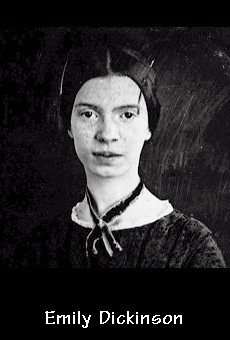
So, in the last week we’ve experienced a change back to Daylight Savings Time, it’s officially spring again, and March is Women’s History Month. Let’s try to cover all those bases by re-reading one of Emily Dickinson’s poems.

This week, I’m especially attuned to last line of the first stanza and the first line of the second stanza. (I can't seem to get them to separate. So, I'm talking about " 'That must have been the sun!' But how he set I know not.")Every time we “spring forward” my sleep patterns get discombobulated.

A Day

I'll tell you how the sun rose,
A ribbon at a time.
The steeples swam in amethyst,
The news like squirrels ran.
The hills untied their bonnets,
The bobolinks begun.
Then I said softly to myself,
"That must have been the sun!"
But how he set, I know not.
There seemed a purple stile
Which little yellow boys and girls
Were climbing all the while

Till when they reached the other side,
A dominie in gray
Put gently up the evening bars,
And led the flock away.

Wednesday, March 24, 2010

Women of Wednesday: Two Newbery Winners


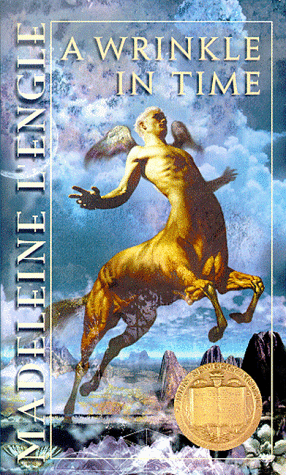
“Madeleine L’Engle throws her hands up in the gesture that says ‘Who knows?’ when a visitor asks how many rejections she received for her award-winning book, A Wrinkle in Time.
‘There were over 30,’ she says, ‘It almost never got published. People think it was my first book, but it was the 11th to be written. I call it my “Cinderella book.” You name any major publisher in New York, and they rejected it.’
No on really expected it to sell, she confesses but ‘it really took off.’ It won a Newbery medal in1963, is in its 39th printing…and has come to be considered a children’s classic.” Jean Caldwell, p. 74, On Being a Writer, Writer’s Digest Books, 1989.


This is the story many children’s book writers cling to when the latest rejection letter comes in. A Wrinkle in Time is a wonderful book, and like all of our wonderful books, it just needed to find that special editor who would recognize its wonderfulness.

The most recent Newbery winner is Rebecca Stead who pays homage to L’Engle’s book in her own When You Reach Me. Stead’s book is also a fantasy and a time travel book. The main character, Mira, clings to A Wrinkle in Time. It’s her favorite book and she reads it over and over.

Both L’Engle and Stead wait awhile to let their readers in on the fact that the books are fantasy. L’Engle starts out with enough creepy description that one thinks they may have stumbled onto a ghost story. Those who love pop culture will get the joke in the L’Engle’s opening line as either the one often used by Snoopy in the Peanuts © cartoon strip or as the basis for San Jose State Univeristy’s annual Bulwer-Lytton Fiction Contest that seeks examples of overly dramatic fiction:

“It was a dark and stormy night.
In her attic bedroom Margaret Murry, wrapped in an old patchwork quilt, sat on the foot of her bed and watched the trees tossing in the frenzied lashing of the wind. Behind the trees clouds scudded frantically across the sky. Every few moments the moon ripped through them creating wraith-like shadows that raced along the ground.”

Stead’s novel, set in the 70’s, opens like any typical pre-teen story with a girl, a single mom, a challenge, and soon, we learn, a friendship that is ending:

“So Mom got the postcard today. It says Congratulations in big curly letters, and at the very top is the address of Studio TV-15 on West 58th Street. After three years of trying, she has actually made it. She’s going to be a contestant on the $20,00 Pyramid, which is hosted by Dick Clark.”
Both stories quickly lead us into the bigger problems faced by the main characters. Meg’s father is missing. Mira’s been getting mysterious and cryptic notes: “I am coming to save your friend’s life, and my own…” Time travel will solve both problems.

Both authors have created flawed, believable characters. The impossibilities that create the plots become possible in our minds. Good writers can do that. If you don’t usually make a habit of reading the Newbery authors, start with these two. Get to know a couple of good writers.

Monday, March 22, 2010

PERCEPTION IS BASED ON EXPERIENCE

Writing for children is like writing for adults—only harder.

People who have never tried to write for kids don’t “get” that statement. In fact, many children’s writers will tell you that they have been asked, at one time or another, if they think they will ever write a real (read adult) book.

Like adult literature, a good children’s book is marked by an interesting plot, fascinating characters, and enough tension to keep the pages turning. However, a writer for children must also pay attention to extra aspects when creating a story. We think about our intended audience in order to determine how easily they will absorb the tale. This ability is going to be based on the child’s level of reading skill and more importantly, his or her age. For most children, their age will tell us a little bit about their life experiences and their life experiences will color their perception of a story.

Here’s an example from my own life:

I'm about age four or five. I’m standing in the kitchen with my mother. She leans down to tuck my t-shirt into my pants. As she does so, the scoop neckline of her dress opens enough so that I can see something terrible: a hole! My mother has a long, dark hole in her chest! I experience an onslaught of emotions such as fear, curiosity, and amazingly, sympathy. I feel so bad for my mom. She has to live with that hole in her chest! It’s no wonder that she’s never mentioned it. She’s probably embarrassed. Well, I decide, I’m not going to make it worse for her. I will NEVER mention the terrible chest hole to anyone. I will keep her secret. I will not even ask her about it, because I don’t want to hurt her feelings. I am old enough to understand about hurt feelings.

What I don’t understand at that age is cleavage. Women in those days did not flaunt it. My mom is a pretty small woman. I’ve never paid attention to the shape of her body. My grandmothers—who were full-figured ladies—had big bosoms. But I don’t know bosoms. I know fat people. Some were fat on top (like my grandmas) and some were fat in the middle (like my grandpas). At that age, my life experience was limited to my ability to be observant. At age four or five, all you care to observe is what impacts you directly: toys, friends, food, love, comfort, feeling safe.

While such an example probably wouldn’t occur in today’s more open society, it serves to show that kids’ stories need to start where they are in life experience. Innocence has to do with the lack of life experience.

Books help kids to grow intellectually, too, but they are not going to succeed if stories start beyond the young reader’s ability to relate. There’s a reason the only kisses in a toddler book are from mommy or daddy. There’s a reason today’s 12-and-13-year olds consider phone texting as “going out” with someone. There’s a reason no book incorporating the U.S. tax code will ever win a Newbery Medal. Reality for a child Is not the same as adult reality.

As you write your story, think about the reader’s perception. Who is your audience? What will they get out of the story?