Showing posts with label writing for children. Show all posts

Monday, February 21, 2011

Mentor Monday: Welcome to the World of Children’s Books

Some years ago, after I left teaching, I started a writers’ group for beginners. Lots of people had asked to join the Write Sisters but we had reached a point in our professional lives where we felt it was not advantageous for us to be constantly devoting meetings to starting over. This new group would be dedicated to newbies.

Several of the Sisters came along for the ride and we got to meet some great writers while keeping our own meetings focused on the sorts of things we needed as published authors. After about 10 years, I turned the group over to others.

I’d like to compare the experience I had with the beginner’s group to running a high school JV basketball team. When you’re the coach of the JV’s, you know that some of today’s team members are going to get to the varsity and some won’t. Some kids don’t have the talent. Some kids are there because their parents thought it was a good idea or because of peer pressure. Some kids want to see if they can do it. Other kids show up for a few practices and then drop out. Some kids are pretty good on their driveway hoop so they think playing with a team against another team shouldn’t be too hard. Others love to watch TV basketball and feel they know the rules well enough to play themselves.

Writers fall into similar categories. There are the “wannabes.” They think they want to write for kids. They dream of writing a kids book. But that’s all that happens, thoughts and dreams. They never put pen to paper or fingers on a keyboard. Or, like the kids that can’t ever learn to dribble a ball, these writers can’t seem to learn to write for modern kids.

There are the people who, like the driveway players, are pretty good writers. They might do other types of writing: technical writing, newsletters, journalism. How hard can it be to “write down?”

There are the people who have read lots of kids’ books: to their children, students, or grandchildren. They might be very familiar with children’s literature but have not really stopped to analyze the books they’ve read. Or, they are stuck reading their old favorites and have never moved on to contemporary titles.

One person who came to our group had taken a sabbatical from her job and had given herself a year to see if she could make it in kids’ publishing. How I wished she’d come to our group before she made such a life-altering decision! I did not have the heart to tell her that a year was not nearly enough. She did not even have a manuscript in progress. I foresaw 12 months of disappointment for this lady. She was looking to be on the varsity team and she had yet to come to a JV practice.

Tomorrow I will continue this topic with a list of ways to get yourself ready (realistically) to become a writer for children. Will you make it to the varsity team?

Monday, March 22, 2010

PERCEPTION IS BASED ON EXPERIENCE

Writing for children is like writing for adults—only harder.

People who have never tried to write for kids don’t “get” that statement. In fact, many children’s writers will tell you that they have been asked, at one time or another, if they think they will ever write a real (read adult) book.

Like adult literature, a good children’s book is marked by an interesting plot, fascinating characters, and enough tension to keep the pages turning. However, a writer for children must also pay attention to extra aspects when creating a story. We think about our intended audience in order to determine how easily they will absorb the tale. This ability is going to be based on the child’s level of reading skill and more importantly, his or her age. For most children, their age will tell us a little bit about their life experiences and their life experiences will color their perception of a story.

Here’s an example from my own life:

I'm about age four or five. I’m standing in the kitchen with my mother. She leans down to tuck my t-shirt into my pants. As she does so, the scoop neckline of her dress opens enough so that I can see something terrible: a hole! My mother has a long, dark hole in her chest! I experience an onslaught of emotions such as fear, curiosity, and amazingly, sympathy. I feel so bad for my mom. She has to live with that hole in her chest! It’s no wonder that she’s never mentioned it. She’s probably embarrassed. Well, I decide, I’m not going to make it worse for her. I will NEVER mention the terrible chest hole to anyone. I will keep her secret. I will not even ask her about it, because I don’t want to hurt her feelings. I am old enough to understand about hurt feelings.

What I don’t understand at that age is cleavage. Women in those days did not flaunt it. My mom is a pretty small woman. I’ve never paid attention to the shape of her body. My grandmothers—who were full-figured ladies—had big bosoms. But I don’t know bosoms. I know fat people. Some were fat on top (like my grandmas) and some were fat in the middle (like my grandpas). At that age, my life experience was limited to my ability to be observant. At age four or five, all you care to observe is what impacts you directly: toys, friends, food, love, comfort, feeling safe.

While such an example probably wouldn’t occur in today’s more open society, it serves to show that kids’ stories need to start where they are in life experience. Innocence has to do with the lack of life experience.

Books help kids to grow intellectually, too, but they are not going to succeed if stories start beyond the young reader’s ability to relate. There’s a reason the only kisses in a toddler book are from mommy or daddy. There’s a reason today’s 12-and-13-year olds consider phone texting as “going out” with someone. There’s a reason no book incorporating the U.S. tax code will ever win a Newbery Medal. Reality for a child Is not the same as adult reality.

As you write your story, think about the reader’s perception. Who is your audience? What will they get out of the story?

Monday, August 31, 2009

MENTOR MONDAY: Back to School, Back to WORK!


The summer’s winding down and families are beginning to get back into the school year routine. Even those of us who don’t have children, or no longer have children at home, can find the fall comforting in its predictability. We can say goodbye to the distractions “de l’été.” No more summer vacations, summer chores, or summer weddings taking us away from our writing time. Now, all we need is…inspiration! I have a suggestion that might help in more than one way.

Writers for children are constantly told is: read what you want to write. If you want to produce good stories for children, read good stories written for children. Look at the way the author has created characters, movement, tension, and resolution. Cut unnecessary words. Revise, revise, revise.

We all know this stuff. Still, it’s nice to have a reminder of what constitutes a good story. I’ve got a fun way to both read and study craft. Two-time Newbery Medal winner, Lois Lowry has written a series of short books staring Gooney Bird Greene. The little red-haired girl shows up at Watertower Elementary Schools in October. The second graders in Mrs. Pidgeon’s class have never met anyone quite like her.

Lowry uses Gooney Bird to illustrate the techniques of good writing. Gooney Bird Greene is a story-teller. She claims to only tell “absolutely true” stories but it’s hard to believe that she drove to Watertower from China, flew on a magic carpet, and got her huge diamond earrings from a palace.

As Gooney Bird tells the other children her stories, she explains about creating interesting characters, adding excitement to stories, when to add just enough detail, and how to use interesting vocabulary.

Gooney Bird may be the one explaining, but Lois Lowry is showing all of us the skills good writers need. So my suggestion is, if you want a great fall warm-up for getting back into your writing schedule, grab some of the Gooney Bird stories. If you really want a treat, listen to Lee Adams bring Gooney Bird and the other children to life in the recorded book version. When you’re finished, you’ll want to work on your own “absolutely true” stories.

Sunday, May 10, 2009

Mentor Monday: A Lesson on Lessons


A few years ago, I wrote a biography of Sarah Josepha Hale. Hale was America’s first lady editor but she was also a talented writer in her own right, an activist, a widowed mother of five who supported her children with her writing.

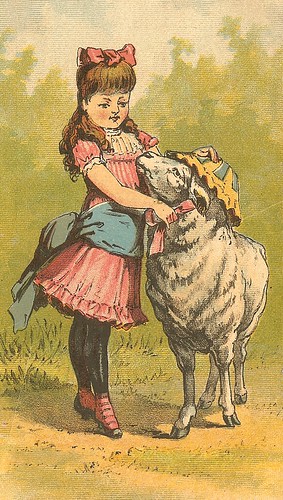
One of her claims to fame is that she is the author of the still-popular children’s rhyme, “Mary’s Lamb.” You know the one:


Mary had a little lamb,
Its fleece was white as snow
And everywhere that Mary went
The lamb was sure to go…

He followed her to school one day
That was against the rule
It made the children laugh and play
To see a lamb in school,


What most people today don’t know is that the poem continues:

And so the teacher turned him out,
But still he lingered near
And waited patiently about,
Till Mary did appear…

Why does the lamb love Mary so?
The eager children cry,
‘O Mary loved the lamb, you know,’
The teacher did reply;--

‘And you each gentle animal
In confidence may bind,
And make them follow at your call,
If you are only kind.’ (Italics Hale's)

****************************
This poem appeared in a collection written for children. Only the first two stanzas are familiar today. Wonder why? Because of the sledgehammer in the last stanza: the LESSON.

The rest of Hale’s Poems for our Children is just as heavy handed. And herein lies the point for all children’s writers: kids don’t want to know they’re learning a lesson in books they choose to read for pleasure.

Imagine going to Barnes & Noble and asking the clerk to recommend something and she pulls out a juicy novel and says, “You’ll love this. It has a great moral lesson at the end.” Just makes you want to whip out the old credit card, doesn’t it?

Yet, many people who want to write for kids think that children’s literature should be filled with morality tales. Not so. That type of writing went out with Aesop. And Sarah Hale. Kids want to read for the same reason as adults do: for pleasure. They want to be taken away to imagined places. They want to visit with beloved characters. If they happen to learn something along the way, well, okay.

In a 2005 article in the Children’s Writer, Susan Taylor Brown quoted editor Marileta Robinson. She said, Many writers try “…too hard to teach a lesson rather than tell a story…”

So, how’s your story? Is it fun? Imaginative? Can your reader connect to your characters? Then what do you need a moral for?

And that’s today’s lesson.

Monday, March 2, 2009

Mentor Monday: But That's How It Really Happened!

Years ago I brought a picture book manuscript to my group for a critique. I was new to writing for kids, but I had done my homework. I knew how to properly format a manuscript. I'd read hundreds if not thousands of picture books so I knew the genre inside and out. I understood the importance of a critique group and was open to the process. I was the best little newbie ever!

I was a lucky little newbie, too. I'd been teaching preschool and kindergarten for 15 years and had acquired more story ideas than I'd ever be able to use. In fact, that particular story I'd brought for critique had been inspired by one of my students. Writing it was as easy as taking dictation, and there's the problem. I stayed too true to how the story really happened. I included too many irrelevant details and extraneous characters. I'd been so wrapped up in getting the retelling "right," that my voice was absent from the story. When my critique partners pointed these things out, I went straight into defense mode.

"But that's how it really happened!" I said. As if that would make them see the error of their critiquing ways.

It took a bit of explaining (I never said I was a smart little newbie) before I understood that this was why the literary gods created artistic license -- to save us from reality's tedious moments. Can you imagine how dull Shakespeare's histories would read had he been rigid with historical facts?

It goes without saying (but I'll say it anyway, just in case) that I'm talking about fiction. Creating words to put in the mouth of your historical subject is verboten. Same goes for creating situations into which you place your historical figure. Nonfiction writers do not make up stuff. It's not nice to do to Oprah. (Think James Frey's Million Little Pieces.)

Monday, November 17, 2008

Is it Possible to do a Pre-Review?

I haven't read the book yet but it's next on my list: A Whole New Mind: Why Right Brainers will Rule the Future by Daniel Pink. I just read Oprah's interview with Pink in her December 2008 magazine. The title of the book fascinated me because my husband used to say he was the only left-brained person supporting a family of right-brained people. He, the CPA and numbers guy, was right. I had managed to give him three children: a classics scholar and two theater nerds. Not a business person, engineer, or mathematician in the bunch. Evidently my right-brained, creative genes were stronger than his left-brained sequential, practical genes.


So it was with personal curiosity that I read Oprah's interview. Some of Pink's statements made me think about the impact of our work as writers for children. He said:

"My generation's parents told their children, 'Become an accountant, a lawyer, or an engineer; that will give you a solid foothold in the middle class.' But these jobs are now being sent overseas. So in order to make it today, you have to do work that's hard to outsource hard to automate...Financial firms are sending their back-office jobs overseas. But what do fine artists do? They create something new, unexpected, and delightful that changes the world...

And what, you ask, can a writer for children possibly do that can "change the world?" I'm glad you brought it up! Just think:


How many children have been soothed to sleep because there exists
a Goodnight Moon?


How many "non-readers" plowed their way through over 700 pages of text because there exists a Harry Potter?


How many families established a new holiday tradition because there exists a book called The Polar Express?

How many jobs were created because of these stories? I can think of dozens! All the merchandise that accompanies these books needed people to make them: posters, stuffed animals, action figures, games, CDs, and, of course, magic bells.
Screenwriters got jobs. Actors got jobs. Voice-over artists got jobs. Northern communities host special train rides that take children on a Polar Express adventure every winter.

Somebody designed Halloween costumes. Somebody else started a web site. Somebody figured out a way to market the books in special sets.

All this because a few right-brained, creative people wrote some books for children.
Imagine!

Tuesday, October 7, 2008

The Power of the Picture Book

I consider 3, 4 and 5-year old children to be "my people." I've spent thousands of hours observing and interacting with them in my classroom at the Hogarth School these last 29 years. They are a source of endless fun, fascination and inspiration for my writing. In fact, the lines between my teaching life and my writing life are so blurred as to be almost nonexistent. My teaching informs my writing, and my writing informs my teaching.

Today was a great day for this teaching writer. It was the first Show-and-Tell day of the school year. Here at Hogarth we call it "Sharing Day," and I'm always curious to see what comes through the door, especially the books. Each month, I can count on at least one or two books being in the treasure trove.

Today 3-year old Arthur brought in one of those search-for-the-hidden pictures books in the Where's Waldo vein, except it tied in with the Disney movie Cars. 4-year old Hayden brought in When I'm Big by Sam McBratney, which I read to the class. They liked it just fine, but were more interested in finding pictures of Lightning McQueen in the Cars book. (How do you compete with Disney and the mass merchandising of Cars?)

The thing that really caught my eye was a globe. Mounted in a highly polished stainless steel (I think) base, the different countries were fashioned from mother-of-pearl, jade, and God knows what other kinds of stone. It was fantastic. One of a kind. I asked Brady, the 3-year old who brought it in, to tell us about it. He immediately spun the globe and found South Korea. "That's where I was born!" He searched out another spot and planted his little 3-year old finger. "That's New Zealand!" I'm not sure what special meaning New Zealand holds for him, but I hope to find out. Another 3-year old, Dev, had shared a dohl drum from India, so we searched out India on the beautiful globe.

I asked Brady if he'd like to tell us anything else before we moved onto the picture John was going to share, and he immediately gave the globe a final spin. Without even having to hunt for it, he jabbed his finger onto Spain. "This is where Ferdinand lives!"

I was flabbergasted. Ferdinand! One of my favorite picture book characters of all time! The fact that this barely 3-year old boy could find Ferdinand's home on the globe speaks to the power of the picture book. (And the power of involved, loving parents.) This little guy connected so strongly with Munro Leaf's classic story of peace and the strength of the individual, that when he was learning about important places in the world, he wanted to learn where Ferdinand lives.

I'll be reading The Story of Ferdinand to my students tomorrow. I can't wait. I really need to thank Brady.

Friday, August 22, 2008

Poetry Friday--Poems Turned Picture Books

Four or five years ago, the Write Sisters gathered in Kathy's kitchen to critique one Friday night. Janet brought an adult poem to run by us. She was thinking she might send it to Yankee Magazine, and wondered if we thought it was a good fit. She read Sail Away, Little Boat, and the decision was unanimous. Ditch Yankee Magazine. With just a little tweaking, she could turn that old poem into a picture book. (That's my nod to Judy Garland and Mickey Rooney, who turned many an old barn into a theater.)

Being open-minded, Janet gave it a whirl. She tweaked and toned her poem, and sent it off to Ellen Stein at Carolrhoda. Ellen loved it, and signed up Janet's poem-turned-picture-book for Carolrhoda's Spring 2006 catalog. Just like that. No rejections. No hand-wringing. No self-doubt.

And now Janet has joined the ranks of picture book poets, among them Clement L. Moore with The Night Before Christmas, Robert Frost with Runaway, Arnold L. Shapiro with Mice Squeak, We Speak, and our own Kathy Deady with All Year Long. I'd say Janet's in pretty good company, but you can judge for yourself.

"Let's launch our boat through the wild, roving brook
And watch as it slides and swirls through the nooks
Of a root-tangled bank where deer like to eat
The tasty green moss growing thick at their feet."

"Sail Away, Little Boat to search for new friends.
Just follow the brook, till it reaches its end."

"Past the slicky-back otter and his slippery friends
Who rollick and roll through the brook as it bends
Over smooth rocks and cool rocks, a wild water ride
As lickety-split the sleek otters slide."

"Past the bullfrogs that hide in a thick cattail forest
And croak out the notes of their splish-splashy chorus."

--Andy

This week's Poetry Friday Roundup is at Read. Imagine. Talk.

Saturday, August 16, 2008

Portsmouth WOG Sighting!

Three of the Write Sisters managed to connect with another WOG subject. Yesterday, Muriel, my "civilian" pals Lynne Barret and Kathy Winn, and I headed into Portsmouth to hear Doris "Granny D." Haddock speak at the South Church. We hooked up with Diane on State Street at Re-Enhabit, my cousin Jodie Curtis's store. Jodie is a sales genius and shared tons of great tips for getting Women of Granite: 25 New Hampshire Women You Should Know (WOG) and the other books in Mur’s Apprentice Shop Books' catalog into stores. She pointed out that these are exactly the kinds of books (well-written, interesting subjects, relevant to the area) that do extremely well in touristy towns such as Portsmouth. We talked with her for about an hour (actually Jodie gave us a crash course in the fine art of sales), and then went to Popovers in Market Square for an outdoor dinner.


Dinner on the sidewalk in Portsmouth is a people-watching extravaganza. The Leftist Marching Band just happened to be playing at a peace rally on the corner right next to Popovers. The band was a colorful mix of old and young hippies attired appropriately and adorned with some of the best body art this side of Seattle. We arrived just in time for the don’t-shop-at Walmart sing-along. Regardless of your feelings about Walmart or your political leanings, they were fantastic. Democracy in action is a beautiful thing. Dinner was mighty tasty, too.


After the band finished, who should appear from the dispersing crowd but Doris “Granny D.” Haddock! She wore her trademark feathered hat, and the only concession to her 98 years was a pair of escorts, one on either side. Lynne snapped a couple of great pictures, and we told Granny we were looking forward to her speech that evening.


We spent the rest of our time in Market Square talking about the literary world's designated next big thing, Brunonia Barry's first novel The Lace Reader (William Morrow, 2008). This originally self-published book ended up going for better than 2 million dollars at auction. At that price, it better be the literary world’s next big thing. Anyway, both Lynne and Kathy live in Salem, Massachusetts, where The Lace Reader is set. They said that the buzz surrounding this book is phenomenal. Salem, a huge tourist town, has even added a Lace Reader Tour to the tourist trolley schedule.


After dinner we headed to the South Church, passing Granny D. and her escorts on our way. (Not much of a feat, really. The woman is 98-years old, after all.) Granny D.'s speech was absolutely inspiring! There aren’t many folks left who remember first-hand women winning the right to vote. She was 10-years old at the time, and recounted how excited and proud her mother was at the prospect of casting her first vote. She made the crowd laugh when she told how her mother turned to her father and asked, “Who should I vote for?” She was quick to point out that was the one and only election for which she sought his advice.


Granny D. remembered trying to bring her father into the Democratic Party. He was a Lincoln Republican (as in personally remembers Lincoln!) and a hard sell. Can you imagine in the year 2008 being able to say that your father was a contemporary of Abraham Lincoln? It’s stunning, really.


We presented Doris with a copy of WOG, and ended up creating a little WOG buzz within the crowd. We are finding that once people learn about WOG, they always want to hear more.


Oh, and guess who else was spotted on State Street yesterday. Jeanne Shaheen, another of our WOG subjects! Diane saw the Governor and her husband strolling past Re-Enhabit shortly before Mur and I arrived.


It was a veritable WOG festival in Portsmouth yesterday!

Tuesday, July 22, 2008

Research Ramblings

I stopped by the Harvey-Mitchell Memorial Library this morning. I’m researching Eunice Kennedy Shriver and Maria Shriver for Apprentice Shop’s 25 Women You Should Know series, and needed to interlibrary loan a couple of books. HMML actually had one of the books I wanted, so I picked up The Kennedy Women: The Saga of an American Family by Laurence Leamer (Villard Books 1994). The trick is going to be confining my reading to Eunice and Maria. Love them or loathe them, there’s no denying this is one fascinating family. I happen to like them.

My father actually knew John Kennedy when Kennedy was a young Senator. Daddy was fresh out of law school and living in Washington, D.C. He met Kennedy while working at the Department of the Navy writing speeches for Admiral Rickover. The two rode the senators’ underground train together, zipping around beneath the Capitol, talking about whatever it is two young World War II veterans from Massachusetts might talk about.

I love that I’m writing about Eunice and Maria. All this Kennedy research is pushing memories of my father, who has been dead 29 long years, to the front of my mind. Thank you, Shriver women.

Saturday, July 5, 2008

We are Washington Bound!

After spending a good part of the last year writing profiles for the Women of series, it was a kick to actually meet one of our subjects. Former New Hampshire governor Jeanne Shaheen was slated to march in the Amherst 4th of July parade, and we took the opportunity to connect with her. She's in the midst of her senatorial bid, but we were able to nab a few moments of her time before she lead dozens of her supporters down Main Street.

What an incredibly gracious woman! Governor Shaheen was happy to learn that the New Hampshire Center for the Book selected Women of Granite to be the featured New Hampshire book at the National Book Festival in Washington, D.C. this September. This means at least seven New Hampshire women will be heading to D.C. this fall!

Pictured above from left to right are Sally Wilkins, Diane Mayr, Andy Murphy, Governor Jeanne Shaheen, Muriel Dubois, and Barbara Turner.

Wednesday, June 25, 2008

Killing Time at Logan

I'm reading Twilight by Stephenie Meyer. Mickey, a former student of mine entering 8th grade in the fall, said it was the best book she'd ever read. Ever. She loved it so much that she slowed down the pace of her reading because she didn't want it to end. So when I found myself with an hour to kill in the Cell Phone Waiting Lot at Logan Airport yesterday, I reached into my World's Greatest Teacher tote bag and pulled out the copy of Twilight I've been dragging around for the last month.

At first, I was distracted by all the "-ly" words. Quickly, sheepishly, gruffly, immediately, unwillingly, brightly, precariously, convincingly, hopefully, finally, gradually, tentatively, apprehensively, vaguely, excessively, devastatingly, quickly, critically, reluctantly, surreptitiously, inconspicuously, occasionally, loudly, carefully, exceptionally, quickly, appreciatively. Did I mention quickly? Things happen quickly in Meyer-world. A lot.

Okay, so the writing isn't anything to write home about. What about the characters? Bella annoyed me, and Edward's intensity was laughable.

I decided to stop reading like a writer, and start reading like a girl caught between 7th and 8th grade. I gave my inner critic the rest of the day off. I read past the adverbs and forced myself into Bella's head. My 13-year old self loved this book. I found Edward leap-frogging over Paul McCartney and Davy Jones to land at the top of my adolescent dream-boyfriend list.

That said, there are so many great books out there and so little time to get through them, I'm not sure if I'm going to finish this one or not. I know my 13-year old self wouldn't have closed the book before reaching the end. I can't say the same for my 53-year old self.

Sunday, June 22, 2008

Research Rule #1: Don't Believe Everything You Read on the Internet

I've learned to check and double-check information gleaned from the internet. If somebody forwards an email touting the cancer cure Johns Hopkins has been hiding, I'll check the content at both Johns Hopkins and Snopes before spreading the good news. If I learn something brand spanking new about a research subject, I'll make certain the source is unimpeachable, and that I can reliably validate that information.

There are some things, however, that I do not question. If I read on the Fandango website that I can catch a showing of Iron Man at the Ioka Theater at 8 p.m., I'm going to believe it. And if I read on the Rebecca Nurse Homestead website that the hours starting June 15th include Thursdays from 10
a.m. to 4:30 p.m., I'll believe that, too. Silly me.

When I arrived at the homestead to sift through the remnants of Rebecca's life, it was closed. The two cars parked outside Rebecca's door lead me to believe somebody must be there, but my repeated knocks and calls of hello-oo went unanswered. I tried phoning the office on my cell, but got little satisfaction from the tinny voice on the answering machine. I left a slightly miffed message, then began roaming the homestead, snapping pictures.

Several clapboards had been replaced and not yet painted, the untreated wood slashing the home's red facade. A kitchen garden was unfolding outside the doorstep, it's neat little rows of corn just about knee high. Except for the two cars parked in the dooryard, I suspect things looked pretty much the same through Rebecca's eyes as they did through mine.

I wandered out to the cemetery where Rebecca's monument dominates the surrounding headstones. A second largish monument sits close to Rebecca's. It lists the names of the people who stood at her trial publicly testifying to her exemplary Christian character, brave souls all.

A pile of Putnams were buried over on the far side of the cemetery, direct descendants of the Putnams who accused Rebecca of witchcraft. How could such a revolting development not leave poor Rebecca eternally rolling in her grave?

As my visit wore on, my slight miffedness melted away. I was happy for the solitude and the chance to walk in Rebecca's footsteps. So what if I didn't get to go through the house? I had the run of the rest of the homestead. And I didn't have to pay $6.50 for the privilege.

Wednesday, June 18, 2008

Procrastination Vacation, Part Deux

The procrastination vacation continues with a field trip! I figure if I'm not going to be writing anyway, I may as well do something that advances the cause. I'm turning my attention to Rebecca Nurse and heading down to Danvers, MA to do a bit of research at the Rebecca Nurse Homestead. I lived on the North Shore years ago in both Danvers and Beverly, so I feel like I'm going home.

I actually visited the Rebecca Nurse Homestead when I was a kid, but I mustn't have been paying much attention. I remember very little about the homestead other than its centerpiece was a big old saltbox affair of a house. I also remember hoping to see a bedwarmer, like the haunted one flying around in an episode of Bewitched filmed at the House of Seven Gables in nearby Salem. Maybe because I used to live on the North Shore, or maybe because I completely loved Bewitched, I remember every last detail about that episode.

Which leads me back to writing. I want to write a Rebecca Nurse chapter for Women of the Bay State: 25 Massachusetts Women You Should Know which my young readers will remember into old age. It shouldn't be that difficult, considering how remarkable Rebecca's life was. It'll be even easier if the bedwarmers start flying around the homestead later today.

Tuesday, June 17, 2008

Shhh! Don't Tell!

I hope my executive editor doesn't see this. I'm supposed to be working on the final draft of Isabella Stewart Gardner for Women of the Bay State: 25 Massachusetts Women You Should Know, but somehow find myself between rounds of Chuzzle. I've decided to make it official and take a one-hour procrastination vacation.

It's not that I don't find Isabella fascinating. I do. Unburdened by the daily grind of keeping body and soul together, she did things only people with scads of money and a great sense of style can do. She had two diamonds fastened to springs and wore them like antennae. She traveled the world buying up Rembrandts, Botticellis, Titians, and Vermeers. She built an Italian-inspired palace on the Fenway in Boston to house her magnificent collection.

I bet Isabella never took a procrastination vacation.