Wednesday, June 22, 2011

Women of Wednesday: Mary Heaton Vorse

 My search for the source of the “apply the seat of the pants to the seat of the chair “ quote the other day drew my attention to Mary Heaton Vorse (1874-1966), a writer of whom I knew almost nothing. Being a curious sort, I resolved to look into her – and a fascinating character she was!

about 1900
Mary was born in New York City to a very wealthy family, grew up in New York and Amherst, Massachusetts, travelled extensively and became fluent in several European languages. At 22 she went off to study at the Art Student’s League in New York, which I have previously read about in the stories of Hilda Belcher and Georgia O’Keefe. There she met a number of women (and a few men) who were active in political causes, especially women’s suffrage. She also discovered that she didn’t really have a talent for painting.

In 1898 Mary married a journalist who encouraged her to develop her writing instead of her painting. They moved to Provincetown in 1906, where Mary gave birth to two children and several books. Her husband died in 1910 and in 1912 Mary married another journalist, Joseph O’Brien. Joseph was quite a radical and through him Mary was re-introduced to politics, becoming a friend of Elizabeth Gurley Flynn and turning her pen to the causes of workers' rights, suffrage and pacifism. By all accounts this was a very happy, friendly marriage and resulted in the birth of a third child before ending tragically with Joe’s death in 1915.

During the years of the First World War Mary wrote extensively in opposition to the war, as well as articles about labor (particularly the plight of child laborers and women) and the problems of the working class. While she wrote for radical papers such as The Masses, her articles also appeared in magazines with national readership: Atlantic Monthly, The New York, Harper’s, The New Republic, etc.

Mary was one of the founders of the Provincetown Theater group, working with a number of better-known (today) writers including Edna St. Vincent Millay and Eugene O’Neill. She was also a founder of the Women’s Peace Party (with Jane Addams and other names more familiar to us today), which formed in 1915 in opposition to American involvement in World War I.

In the early 1920s a miscarriage and a failed love affair dragged Mary into alcoholism, but she overcame the addiction and went on to write several more books and hundreds of articles. Clearly she lived the adage for which she remains known: “The art of writing is applying the seat of the pants to the seat of the chair.” An inspiration to all of us who hope our writing will make a difference, Mary continued to live in her beloved Provincetown until her death at 92. She should be better known!

Monday, June 20, 2011

Mentor Monday: Writing Exercises 1 - Point of View

If you’re like me, the idea of doing a writing exercise when you have an assignment to do (or a great-American-novel begging to be written) feels like a waste of time. It also carries a whiff of the classroom, and as someone who hated writing in school, that whiff is often enough to send me off in search of a closet to clean or an errand to run.

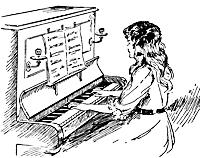
Still, like playing the piano, writing is both a talent and a skill. As a skill, it improves with practice. We know that concert pianists still play scales and drills as well as practicing the music for their next shows – why do we think writers should only write for publication?

In addition, like finger exercises, writing exercises can also be used as warm-ups for writing the “real” work. As such they often serve as block-busters (in the sense of busting through writer’s block), getting you into the BIC* position with fingers on the keyboard without the looming threat of having to produce something. (Sometimes your exercise will even produce material you can use in your work for publication – but don’t plan on that or you change the dynamic.)

Just as with playing the piano, there are lots and lots of writing exercises, but only so many variations on a theme. Over my next few Mentor Mondays I’ll be collecting and improvising upon some oldies-but-goodies from the writing exercise bag of tricks. Each post will focus on a different purpose for the exercise.

This week’s exercise will build on the Mentor Monday series on Voice from earlier this year (see January 31, March 7 and April 11). It is intended to exercise your skill with developing and maintaining a point of view. 

“Point of view” shifting is a common problem for beginning writers, and one that can challenge even experienced writers. Based on my occasional freelance critique work, I believe this is a particularly difficult problem for people who watch a lot of movies or television drama. Those genres allow the writer to move from one character’s point of view to another without confusing the “reader” (in this case, viewer). The visual format allows for all kinds of cues: fade-outs, scene changes, even music create the transitions. It turns out this is very bad training for the mind of a would-be writer. 

Written works can employ more than one point of view, but it is much more difficult to do effectively. For younger readers multiple points of view are essentially verboten. This means that everything that happens in the story has to be observed or experienced by the protagonist, and described in a way that is natural for that character. 

Exercise: Pick a story from morning news, preferably one that involves one or more children. Write collection of narratives based on this account from the point of view of every person possibly involved. Note, this is an exercise. You are free to remain as true to the actual event as possible, or to embellish it wildly. The news story serves only to get you past the need to think up an idea. I just saw a story about a porch collapsing at a Father’s Day party, sending multiple people to hospital. I don’t know who was at the party, but for my exercise it will include at least three generations of family members so I can have distinctly different voices and points of view. In addition to the various attendees at the party, the actual news story included interviews with neighbors and the police, fire and rescue responders, giving me even more points of view to explore.

*BIC = Butt in Chair - the essential "secret" to all writing success - although with the growing popularity of treadmill and other standing desks, it may need revising. See Mary Heaton Vorce, purportedly the originator of “The art of writing is applying seat of pants to seat of chair.”

Friday, June 17, 2011

Poetry Friday: Happy Birthday to Sir Paul McCartney

Tomorrow is Paul McCartney's birthday. I was lucky enough to help him celebrate it a little early (along with 14,000 others) a week ago today in Las Vegas. It was my second McCartney concert, and I can tell you this: At 69 years old, Paul is as cute as ever and he still rocks the house. 

Happy Birthday to you, Sir Paul. (Andy, I'm thinking of you as I write this. Some day, you and I will go see our favorite British boyfriend in concert!) 


Lucky enough to sit this close in Montreal -- August 12, 2010


Today's offering for Poetry Friday are the lyrics of Blackbird, one of my all-time favorite songs. It's credited to Lennon/McCartney, but it was Paul who wrote it in 1968 in Scotland -- inspired by the ongoing racial tensions in the US, and as a message for those who were fighting for equality.  He said this in a radio interview:

"I had been doing poetry readings. I had been doing some in the last year or so because I've got a poetry book out called "Blackbird Singing", and when I would read Blackbird, I would always try and think of some explanation to tell the people, 'cause there's not a lot you can do except just read the poem, you know, you read 10 poems that takes about 10 minutes, almost. It's like, you've got to, just, do a bit more than that. So, I was doing explanations, and I actually just remembered why I'd written Blackbird, you know, that I'd been, I was in Scotland playing on my guitar, and I remembered this whole idea of "you were only waiting for this moment to arise" was about, you know, the black people's struggle in the southern states, and I was using the symbolism of a blackbird. It's not really about a blackbird whose wings are broken, you know, it's a bit more symbolic"
                      Paul McCartney, Interview with KCRW's Chris Douridas, May 25, 2002

The poem is in smaller print so the line breaks stay to true to format.


Blackbird


Blackbird singing in the dead of night, take these broken wings and learn to fly
All your life, you were only waiting for this moment to arise

Blackbird singing in the dead of night, take these sunken eyes and learn to see

All your life, you were only waiting for this moment to be free

Black-bird fly

Black-bird fly, into the light of a dark black night

Black-bird fly

Black-bird fly, into the light of a dark black night

Blackbird singing in the dead of night, take these broken wings and learn to fly

All your life, you were only waiting for this moment to arise
You were only waiting for this moment to arise
You were only waiting for this moment to arise 


Rock on over to Jone's and check out more Poetry Friday posts.

Friday, June 10, 2011

Poetry Friday: A Debt Owed…

So yesterday, I started to clean the pool and found a little black vole sitting on the top step. When I approached, he dove into the water and headed for the deep end. His decision was not going to end well. I decided to intervene. I scooped him up with the net, set him down near the pool fence, and watched him head off to the woods.


I hope that field mouse knows he owes me. In his honor:

The Lion and the Mouse

(after Aesop)


Lion lies sleeping, silent and still,

Along comes a mouse and thinks he’s a hill.

Up the great body the little mouse goes,

Through mane, across ear, and down Lion’s nose.


But Lion wakes up and gives a great roar,

Catches poor Mouse in his long cruel claw.

“How dare you walk over your king and your lord!

For this only death shall be your reward.”


The little mouse shivers and shudders with fright,

Tries hard to think how to put things a-right.

“Forgive my mistake, mighty Lion, I pray,

And I promise to help you too some day.”


At this Lion laughs and shakes to and fro,

But he’s now in good humour and lets the mouse go.

Days come and days go, and some hunters pass by

Who set a great lion-trap cunning and sly.


Lion walks in, unaware of the threat,

And suddenly finds himself caught in a net.

Frustrated he roars with wrath and despair;

Little Mouse hears how he’s caught in a snare.


She remembers her promise and runs without pause

To the spot where the Lion so rages and roars.

Her sharp little teeth set to gnawing the rope,

Thread after thread, now the Lion feels hope.


Soon there’s a hole and the Lion is freed.

The Mouse has kept her promise indeed!
Paul King


Stay out of the deep end. Instead, head over to Anastasia's blog for the round-up:

Monday, June 6, 2011

The Secret Method for Writing Success


“There are three rules for writing a novel. Unfortunately, no one knows what they are.” Somerset Maugham


Maugham was wrong. There are exactly 10 rules for having a successful writing career and here they are:

1) Always write in a space in your home that you have dedicated to this purpose.
or
Find a spot to write (such as a coffee shop or the library) that takes you away from your distractions at home.


2) Write at the same time every day and write for a pre-determined amount of time or a set number of pages per day.
or
Write whenever you can squeeze in a minute or two.


3) Play some inspirational background music while you write.
or
Write in silence. Thoughts become clearer.


4) Keep a paper and pen next to your bed so you can write down any ideas that come to you as you dream.
or
Don’t worry about ideas escaping from you. When you write, important ideas return.


5) Develop character studies and outline a plot before you begin to write.
or
Let your writing flow freely and write scenes out of order.


6) Read the types of genres you want to write.
or
Don’t read too much of the same genre that you write or you may find that your own, singular voice disappears.

7. Uh…

Oh, never mind. I just realized there’s only one rule.